
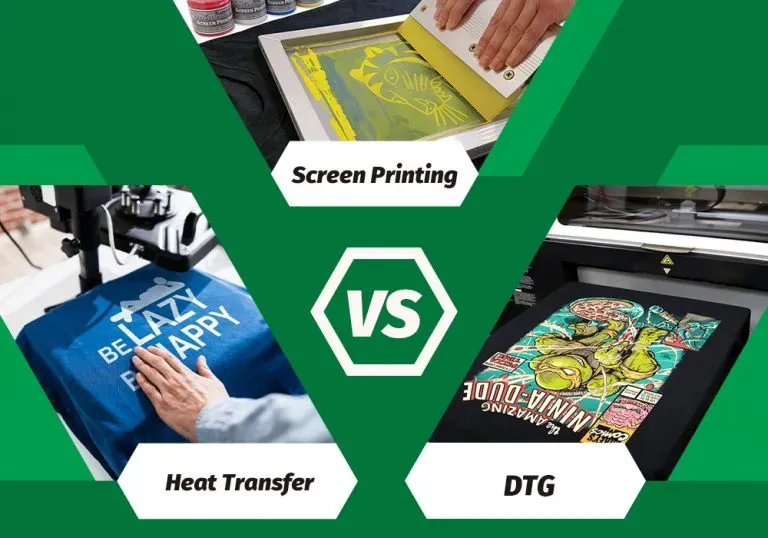
DTG vs sublimation vs screen printing for POD is a decision many designers weigh carefully when launching a product line. Understanding the core tradeoffs helps you align artwork with substrates, budget, and timelines. Each method brings different strengths to color, durability, and production speed. The substrate you select—cotton, polyester, or coated surfaces—will further steer the best fit. This concise introduction equips you to compare options and plan a practical path for your POD strategy.
In the realm of on-demand product customization, POD printing methods like direct-to-garment, sublimation, and screen printing cover the major options. DTG printing (direct-to-garment) uses water-based inks to reproduce detailed artwork on natural fibers with a soft hand. Sublimation printing locks vibrant color onto polyester and coated surfaces through heat and gas transfer, creating edge-to-edge designs. Screen printing for apparel remains a robust choice for bulk runs, delivering durable, high-opacity colors on cotton-heavy fabrics. For a modern POD business, applying print on demand best practices means aligning artwork, substrate, and process with your audience and order volume. By framing options with related terms—transfer techniques, heat-press considerations, and substrate compatibility—you can build a strategy that scales.
1) DTG Printing for POD: Benefits, Limitations, and Best Uses
DTG printing (Direct-to-Garment) is a popular choice for POD apparel because its water-based inks can reproduce photographic imagery with a soft hand and high color fidelity on cotton and cotton-blend fabrics. This method aligns well with POD printing methods that prioritize on-demand flexibility, customization, and the ability to offer rapid variations without expensive setup. For brands prioritizing high-resolution artwork and a print-on-demand workflow, DTG provides a practical pathway to test designs and iterate quickly.
However, DTG comes with notable considerations. Dark fabrics require a white underbase to preserve color accuracy, which adds cost per unit and an extra production step. Inks can appear less saturated on deep tones, and fabric type matters—100% cotton or high-cotton blends yield the best results, while polyesters may require different workflows or pretreatments. Regular calibration of printers, inks, and pretreatment chemicals is essential to maintain consistency across batches, especially when operating a small, on-demand catalog.
2) Sublimation Printing in POD: The Color Power for Polyester and Coated Surfaces
Sublimation printing excels as a color powerhouse for POD products with synthetic or coated substrates. By converting solid dye inks into gas under heat and pressure, designs bond with polymer-coated surfaces or polyester fabrics to produce edge-to-edge color and highly durable results. This makes sublimation ideal for items like all-over printed polyester apparel, mugs, phone cases, and other polymer-coated goods where vibrant color and wash resistance matter.
The main caveat is substrate compatibility. Sublimation works best on white or light-colored surfaces and requires a sufficient polyester content or polymer coating to lock the image in. Dark fabrics or non-coated materials struggle with sublimation results, so this method is best reserved for products that can tolerate light backgrounds and compatible substrates. For non-fabric items, specialized coated substrates are often required, which can influence cost and production planning in a POD catalog.
3) Screen Printing for Apparel: When to Choose High-Volume, Durable Outputs
Screen printing for apparel remains the traditional workhorse for high-volume orders and long-lasting apparel. The process uses a mesh screen to apply ink layers, with each color requiring its own screen. The result is bold, opaque prints with excellent color opacity, durability on cotton-heavy fabrics, and a distinctive tactile feel that many customers associate with quality basics. For brands aiming at scalable, consistent results, screen printing aligns with a strong production backbone in a POD strategy that emphasizes bulk runs.
The trade-offs center on setup and flexibility. Creating screens, color separations, and proofing takes planning and upfront investment, so screen printing is less economical for small runs or frequent design changes. It performs best on natural fibers (especially 100% cotton) and lighter substrates for the final color output, unless special inks or discharge processes are used. When longevity and high-volume efficiency are priorities, screen printing often remains the optimal choice.
4) DTG vs sublimation vs screen printing for POD: Which Method Fits Your Product Strategy?
Choosing among DTG, sublimation, and screen printing for POD involves mapping product strategy to substrate, order volume, and design complexity. Consider your target audience, product mix, and brand story when evaluating which method to scale first. This decision is central to POD printing methods and should be guided by practical tests, cost of ownership, and the expected lifetime of items in customers’ hands.
For example, all-over color graphics on polyester or coated goods favor sublimation, while photo-realistic apparel with soft hand feels a great fit for DTG. Bold logos or typography on bulk apparel often benefits from screen printing due to its durability and lower per-unit costs at scale. A hybrid approach—using sublimation for mugs and cases, DTG for apparel, and screen printing for logo-heavy items—can align with both customer expectations and print on demand best practices for a diversified catalog.
5) Practical Framework: Comparing Image Quality, Substrates, and Durability Across Methods
A practical framework helps POD entrepreneurs assess image quality, substrate compatibility, and durability across the three core methods. DTG printing shines with photographic imagery, subtle gradients, and soft hand on light-to-mid-tone fabrics, making it well-suited for fashion-forward tee designs and limited-run collections. Sublimation delivers vibrant, edge-to-edge color on polyester and coated surfaces, ideal for all-over prints and items like mugs or phone cases where color constancy across surfaces matters.
Screen printing offers punchy, solid colors with strong durability, especially on natural fibers such as 100% cotton. The method scales efficiently for bulk orders but demands upfront setup, color separations, and longer lead times for small runs. Across all methods, consider color management, substrate quality, and color fidelity when planning designs, and weigh production speed and MOQs to determine the most cost-effective path for your catalog.
6) Best Practices for POD Businesses: Design, File Prep, and Packaging Across Methods
A set of best practices helps implement successful POD strategies across DTG, sublimation, and screen printing. Design for the method means crafting artwork with dimensions and color realism in mind, especially when you plan to offer multiple printing methods. File preparation should emphasize high-resolution vector or raster images, proper color profiles for DTG and sublimation, and clean separations to avoid tiny text filling in during production.
Substrate quality, pretreatment, and quality control remain critical. For DTG, follow pretreatment recommendations to brighten colors on dark fabrics; for sublimation, select substrates with sufficient polyester content or coatings; for screen printing, perform pre-press checks and choose appropriate fabric weights. Don’t neglect mockups, packaging, and branding—these details influence customer satisfaction and can become a differentiator when communicating your brand’s print-on-demand best practices and sustainability story.
Frequently Asked Questions
What are the key differences between DTG printing, sublimation printing, and screen printing for POD, and how do you choose the right POD printing method?
DTG printing excels at detailed photography on cotton-based fabrics and supports on-demand variation, while sublimation printing delivers vibrant, edge-to-edge color on polyester or coated substrates and is ideal for all-over designs; screen printing for apparel offers durable, bold color at scale, especially for bulk orders on natural fibers. When choosing, assess substrate compatibility, design complexity, order volume, and total cost per unit; remember DTG often requires pretreatment on dark fabrics and sublimation requires polyester or coating while screen printing benefits from scalable production for larger runs.
When should you use DTG printing vs sublimation vs screen printing for POD apparel?
Use DTG printing when you need high-detail artwork on cotton garments with low to moderate volumes and customization. Use sublimation when all-over color, edge-to-edge graphics on polyester or coated items are required. Use screen printing when you’re producing large quantities of solid-color designs on natural fibers and want the lowest per-unit cost at scale.
How do substrate and material choices influence DTG printing, sublimation printing, and screen printing for POD products?
Substrate is the primary driver: DTG printing performs best on 100% cotton or cotton blends; sublimation printing shines on polyester or polymer-coated surfaces; screen printing yields the best results on cotton-heavy fabrics and is versatile but benefits from proper screen setup. Pretreatment for DTG on dark fabrics and substrate coatings for sublimation, along with color management, will impact the final output.
What are the cost, production speed, and durability trade-offs among DTG printing, sublimation printing, and screen printing for POD?
DTG printing generally has low upfront setup and is cost-effective for low-volume, personalized runs, but per-unit costs can rise with volume and color complexity. Sublimation typically offers fast setup for multiple SKUs and excellent color, but is limited to polyester-coated or polymer substrates. Screen printing requires upfront investment in screens and setup, but per-unit cost drops significantly with large runs and is highly durable on cotton.)
What are best practices for POD businesses to optimize DTG printing, sublimation printing, and screen printing for apparel?
Follow POD printing best practices: design for the method with color realism in mind; use high-resolution artwork and correct color profiles; ensure substrate quality and pretreatment for DTG on dark fabrics and appropriate coatings for sublimation; maintain calibration and run color proofs for consistency; create accurate mockups and align packaging to the chosen method.
Which printing method is best for all-over designs versus solid-color logos in POD, and how should you evaluate DTG printing, sublimation printing, and screen printing for POD?
For all-over designs, sublimation printing on polyester or coated substrates is typically best; for bold solid-color logos on apparel, screen printing offers durability and cost-efficiency at scale; DTG printing is ideal for detailed images on light fabrics. Evaluate by substrate compatibility, design requirements (all-over vs. solid blocks), order volume, cost per unit, lead time, and color fidelity to choose the right POD method.
| Aspect | DTG (Direct-to-Garment) | Sublimation | Screen Printing |
|---|---|---|---|
| Substrate compatibility | Best on 100% cotton or cotton blends; dark fabrics require a white underbase; poly may require pretreatment | White/light surfaces; polyester or polymer-coated substrates | Versatile on cotton and natural fibers |
| Image quality | Photographic detail and soft gradients on light-to-mid fabrics | Vibrant, edge-to-edge color on polyester/coated surfaces; dye bonds with substrate | Bold, opaque colors; best for logos and solid blocks; fewer colors simplifies printing |
| Durability and feel | Soft hand feel; durable with proper curing; white underbase can affect feel on darks | Ink becomes part of substrate; extremely durable on compatible surfaces | Rugged, durable; thicker ink; tactile finish; long-lasting on cotton |
| Setup and cost | Low setup; ideal for low-volume and on-demand variation | No screens; substrate-specific costs; scalable across many SKUs | High upfront cost for screens; cost-effective in bulk; reuse of screens lowers per-unit cost |
| Production speed / Turnaround | Fast for single items or small batches; easy to customize | Fast with prepared substrates and stock; all-over color possible | Fast per-unit for large runs after screens are prepared |
| Best use cases | Apparel with detailed art; on-demand customization | All-over color on polyester or coated items; mugs and cases | Logo-heavy designs and bulk apparel; durable for long-term wear |
| Limitations | Limited saturation on dark fabrics without white underbase; color can shift with deep tones | Not suited for dark/non-coated materials; best on white/light surfaces | Higher setup time; less economical for small runs; best on natural fibers |
| Cost per unit | Low setup; cost varies with color complexity; may be higher per item for simple designs | No screens; cost tied to substrate; good for high-color designs | Lowest unit cost at high volumes; high upfront screens; ink efficiency for solid areas |
Summary
DTG vs sublimation vs screen printing for POD offers distinct advantages and trade-offs that depend on substrate, volume, and desired look. DTG shines on natural fibers and detailed artwork, sublimation excels for all-over color on polyester and coated items, and screen printing remains the best choice for bulk orders with bold, durable prints. Choose based on product type, substrate compatibility, production scale, and budget, and test proofs to balance color fidelity, durability, and cost. By planning around these factors, you can build a flexible POD strategy that aligns with your brand and customer expectations.