
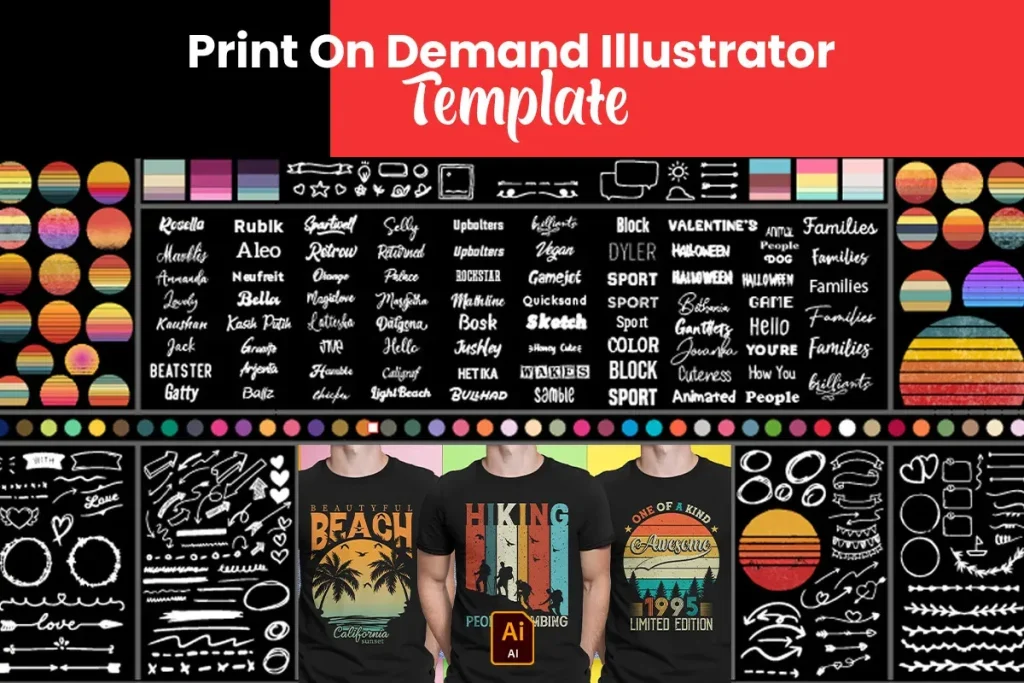
Design for Print on Demand is about more than pretty pictures—it’s a methodical process that turns ideas into sellable products across apparel, home decor, accessories, and more. This approach blends creativity with practical workflow considerations, grounding art in the realities of production and platform requirements. Understanding the POD platforms, crafting convincing mockup previews, and testing pricing strategies for POD helps designs travel from inspiration to storefront-ready listings. Finding POD product niches where your style resonates is essential to stand out in a noisy market. This guide offers practical steps to optimize listings, imagery, and storytelling for conversion and sustainable growth.
In on-demand printing for merchandise, consider it a digital-to-goods production workflow that scales with demand. Within this framework, success hinges on understanding fulfillment networks, partnering with print providers, and presenting products through cohesive storefront storytelling. You can fashion your craft for multiple channels, from apparel drops to home accents, by aligning your visuals, messaging, and pricing with platform expectations. Exploring related concepts such as scalable art, licensing models, and adaptive designs helps create a resilient strategy that travels across formats.
Understanding the POD Ecosystem and Platform Diversity
Print on Demand (POD) creates a flexible, inventory-free path for artists to offer a broad catalog across apparel, home decor, accessories, and more. To succeed, it’s essential to understand how POD platforms differ in focus, audience, and requirements, from file formats and color management to print quality and fulfillment timelines. This awareness helps you tailor your designs for technical compatibility and marketplace appeal while avoiding common production hurdles.
POD platforms vary in their strengths—some prioritize art-centric marketplaces that celebrate aesthetics, while others emphasize product categories like apparel or home goods. By aligning your art style with the right channels and using multiple channels when appropriate, you can meet different customer expectations and format constraints. The result is a scalable approach where your designs perform well across storefronts, benefiting from platform-specific visibility and cross-format adaptability.
Finding Your POD Product Niches: Aligning Passion with Market Demand
A successful POD strategy starts with narrowing your focus to a niche, which clarifies your design language and informs your product mix. Identify themes, aesthetics, or philosophies you’re passionate about and that resonate with a target audience—nature-inspired motifs, retro typography, minimalist geometry, or wellness illustrations are common starting points that translate well across products.
Thorough research helps you understand what sells, what’s underrepresented, and which styles perform on different formats. Analyze existing POD product lines, read reviews, study pricing, and note the lifestyle messaging that accompanies top sellers. Your aim is to blend your unique voice with market signals so your work appears in search results, earns wishlist additions, and converts views into purchases across POD platforms.
Design for Print on Demand: Translating Inspiration into Market-Ready Art
Design for Print on Demand requires balancing creativity with the realities of production on diverse substrates. Focus on high resolution and scalable formats, favoring vector art when possible while ensuring raster work exports at 300 DPI or higher for prints. Consider how your design reads on small items like mugs and large formats like wall art, so the artwork remains impactful regardless of product size.
Licensing, originality, and adaptability are core to long-term success. Create artwork that is truly your own or properly licensed, and craft modular elements that can be repurposed across prints, apparel, home decor, and accessories. This approach preserves your artistic voice while enabling efficient production and consistent branding across POD platforms.
Creating Adaptive Artwork for Multi-Format POD Success
A core practice is to develop a limited-but-focused catalog of motifs that share a unifying visual language. Consistency helps customers recognize your work and builds brand loyalty, while adaptability ensures your designs perform across products, from wall art to apparel and accessories.
Test early by sketching new pieces with at least three product formats in mind. This foresight reduces rework and guarantees that your designs can be easily adapted for multiple POD platforms. By embracing modular elements and scalable compositions, you can expand your catalog efficiently while maintaining quality and coherence.
Mockups, Mockup Previews, and Visuals That Convert on POD Platforms
High-quality mockups are a pivotal part of a successful POD strategy. They show potential buyers how art will look on real products and help customers visualize fit, scale, and context across home decor, fashion, and gadgets. Invest time in creating mockups that reflect lifestyle usage and showcase versatility.
A strong mockup strategy uses consistent lighting, multiple views, and close-ups to highlight texture and detail. Provide several angles and contextual scenes to reduce uncertainty, increase confidence, and improve conversion rates on POD platforms. When mockups align with actual product appearance, they become powerful sales tools that complement the design work.
Pricing Strategies for POD: Balancing Margins, Promotions, and Value
Pricing is a delicate balance between profitability and perceived value. Start by compiling all costs—base product, printing, shipping, platform fees, and your time—and set base prices that ensure a healthy margin while leaving room for promotions and bundles. Thoughtful pricing is essential to sustain a viable POD business over time.
Consider tiered pricing across product families and explore licensing or exclusivity options that justify higher prices for premium designs. Align your pricing with niche and platform expectations, and don’t shy away from A/B testing product variants and promotions to discover optimal price points. By linking pricing strategies for POD to your niche and platform insights, you can maximize revenue while delivering value to buyers.
Frequently Asked Questions
What is Design for Print on Demand and why does it matter on POD platforms?
Design for Print on Demand is the deliberate process of creating art that translates well across POD formats—from apparel to home decor—while meeting platform specs. It matters because adaptable, high-quality designs improve visibility, reduce rework, and increase conversions on POD platforms. Focus on scalable artwork, smart file preparation, and clear presentation to maximize success across multiple products.
How can I use mockup previews to boost conversions for my POD product niches?
Mockup previews should demonstrate real-world use and lifestyle appeal. Use high-quality, consistent lighting and multiple contexts (home decor, fashion, gadgets) to show versatility. Provide several angles and close-ups to reveal texture and detail. For POD product niches, ensure mockups speak to the target audience’s daily life and values, improving confidence and driving sales.
What are effective pricing strategies for POD to balance profit and value?
Pricing strategies for POD start with a clear cost picture: base product cost, printing, shipping, and platform fees. Then set a base price with a healthy margin and use tiered pricing or bundles across product families. Consider exclusive licenses or limited-time promos, and run A/B tests to refine pricing per niche and platform expectations.
Which POD platforms are best for art-focused designs, and how should I tailor my designs for each?
POD platforms vary in audience and product emphasis. For art-focused designs, align your style with platform expectations, export formats, and print specs. Tailor artwork for each channel by planning formats early, reusing modular elements, and ensuring metadata and tags reflect your niche. Using multiple platforms can diversify reach while keeping your design language consistent.
How do I identify a profitable POD product niche and turn it into scalable Design for Print on Demand artwork?
Start with niche research: audience interests, competitive gaps, and format performance. Choose themes you’re passionate about and develop a unifying visual language. Create a small catalog of motifs and sketch for at least three product types from the outset, ensuring designs scale across prints, apparel, and home goods to maximize POD scalability.
What licensing and quality considerations are essential when creating print on demand art for POD platforms?
Prioritize original art or properly licensed elements and clearly define usage rights. Manage color faithfully with proper proofs, respect bleed and file specs, and stay mindful of platform licensing policies. Clear licensing and attribution where required protect your brand and ensure your print on demand art remains compliant across POD platforms.
| Aspect | Key Point |
|---|---|
| What POD is and why it matters | POD turns designs into sellable products without upfront inventory; it relies on platforms to print and ship, enabling scalable revenue across apparel, home decor, and more. |
| POD landscape and platforms | Different POD platforms vary in focus; success comes from understanding file quality and formats and optimizing listings for visibility; using multiple channels helps reach varied audiences. |
| Niche and audience | Narrow your focus to a specific niche; identify themes that resonate with a defined audience; research what’s selling and align your voice with market signals to improve discoverability. |
| Design principles for sellable POD art | Key principles include: high resolution and scalable formats; vibrant colors across substrates; simplicity and readability; reusability across products; and original/licensed work with clear licensing. |
| Artwork across formats and consistency | Develop a unifying visual language and ensure motifs scale from wall art to apparel; test motifs on at least three product types early to inform expansion. |
| Mockups and presentation | Use high-quality mockups in real contexts with consistent lighting and multiple views to boost conversion; show texture and details through close-ups. |
| Pricing and licensing | Calculate all costs (base, printing, shipping, fees, time); set a base price with healthy margins and consider tiered pricing and licensing options; test with promotions. |
| SEO and listings optimization | Incorporate focus keywords in titles and descriptions; optimize image file names and alt text; use broad and niche keywords to improve platform and external search visibility. |
| Quality control and licensing notes | Ensure exports meet platform specs; manage color, bleed, and substrate limits; clearly define licensing and usage rights across products. |
| Marketing and measuring performance | Build an audience beyond the platform; track views, CTR, add-to-cart, and sales; iterate based on data and rotate new releases to maintain momentum. |
Summary
Design for Print on Demand is a holistic craft that blends artistry with commerce. This field rewards clarity of niche, adaptable design, and disciplined optimization—from choosing the right platforms and crafting convincing mockups to pricing thoughtfully and tracking performance. By approaching each touchpoint with a user-focused mindset and a data-informed plan, creators can grow a resilient POD business that scales across apparel, home decor, and accessories. Design for Print on Demand invites you to translate inspiration into repeatable sales while maintaining quality and authenticity across formats and storefronts.