
Patch management is the ongoing discipline of updating software through patches. In the realm of software maintenance, this process directly influences security patches, reliability, compliance, and overall risk posture, guiding budgeting and governance, and aligning with security teams, procurement, and executive stakeholders. When patching is delayed or poorly executed, organizations face exploitation, operational downtime, and rising costs in the short and long term. This article explains why patch governance matters, outlines the steps involved, and offers practical guidelines to keep systems secure. By adopting patch deployment best practices and a proactive approach to vulnerability management, teams can reduce risk and improve continuity.
Alternatively described as ongoing software update governance, patching cadence, and vulnerability remediation, this discipline ensures critical fixes reach systems efficiently. Organizations adopt a structured update lifecycle—detecting vulnerabilities, evaluating risk, validating compatibility, and deploying security updates with minimal disruption. By framing patching as a collaborative, cross-functional practice that blends IT operations, security, and development, teams can build resilience and demonstrate due care.
Understanding Patch Management in Modern Software Maintenance
Patch management is a critical discipline within software maintenance that ensures vulnerabilities are addressed promptly and systems remain reliable across industries. It encompasses identifying, acquiring, testing, deploying, and verifying patches for the software stack, from operating systems to applications. When patches are delayed, organizations face higher risk of exploitation, operational downtime, and escalating costs. A well-managed patch program contributes to security, stability, and regulatory compliance.
Effective patch management goes beyond clicking install. It requires visibility into what software exists, a risk-based prioritization scheme, robust testing in a controlled environment, and coordinated deployment with verification. Cross-team collaboration among IT operations, security, and development is essential to minimize regression risk and ensure traceability. By treating patching as a structured process within software maintenance, organizations can improve reliability and reduce the mean time to patch.
The Patch Management Process: A Structured Lifecycle
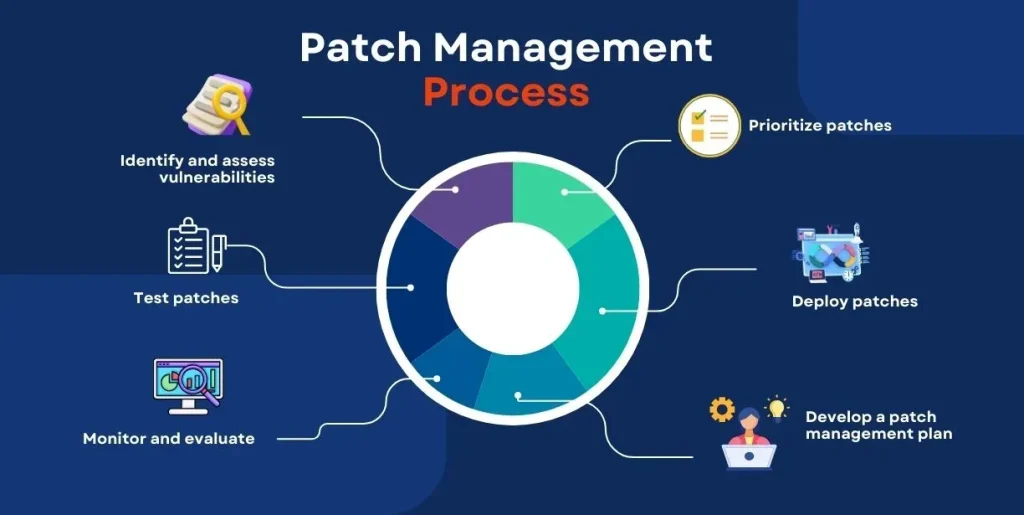
The patch management process is a structured lifecycle spanning inventory and discovery, patch assessment, testing, deployment, verification, and auditing. Inventory and discovery establish what needs patching, while patch assessment prioritizes updates by security impact and business relevance. Testing in a controlled environment helps validate compatibility, and deployment should follow a staged rollout to catch issues early. Verification confirms successful installation, and auditing provides traceability for compliance.
Organizations should build repeatable workflows that align with broader software maintenance goals and risk tolerance. Emphasize metrics and milestones to monitor progress, integrate with vulnerability management data for informed prioritization, and apply patch deployment best practices to minimize downtime and risk. A well-defined patch management process enables predictable outcomes and continuous improvement across the enterprise.
Security Patches and Vulnerability Management: A Coordinated Strategy
Security patches are the frontline defense against known vulnerabilities, reducing exposure to CVEs and the likelihood of exploits. An effective program treats patching as a continuous security control that complements broader vulnerability management efforts. By correlating exploit availability, asset criticality, and exposure, teams can prioritize high-risk patches and accelerate remediation.
A coordinated strategy ties vulnerability management directly to patch prioritization and verification. Regulators increasingly expect demonstrable remediation workflows and audit trails. When vulnerability data informs patch decisions, organizations can allocate resources to the most consequential risks, strengthening overall software maintenance and resilience while meeting governance requirements.
Patch Deployment Best Practices: Speed, Safety, and Compliance
Patch deployment best practices emphasize predictable maintenance windows, staged rollouts, and automation to accelerate remediation while reducing human error. A phased approach—pilot rollout followed by broader deployment—helps detect regressions early and minimize business disruption. Automation supports detection, deployment, and reporting, enabling faster, more reliable patching across heterogeneous environments.
Robust change control and rollback plans are essential to safety and compliance. Validate patches in testing environments that mirror production, document approval decisions, and maintain audit-ready records. By combining testing, automation, and governance, organizations can achieve timely patching without compromising performance or reliability.
Measuring Patch Management Success: Metrics, Dashboards, and Reporting
Measuring patch management success requires meaningful metrics such as patch deployment time (time from patch release to deployment), patch success rate, mean time to patch (MTTP), and compliance coverage. These indicators reveal how quickly and effectively patches are applied, helping to identify bottlenecks and guide improvements across the patch management process.
Dashboards and regular reporting provide visibility into vulnerability posture and remediation progress. Tracking post-patch incidents, downtime, and rollback frequency informs risk management and demonstrates value to stakeholders. The continuous loop of measurement, analysis, and adjustment drives stronger software maintenance, security hygiene, and operational resilience.
Overcoming Common Patch Management Challenges with People, Processes, and Technology
Patch management faces challenges such as patch fatigue, compatibility conflicts, downtime pressure, and complex cross-platform dependencies. Addressing these requires a balanced mix of people, process, and technology to sustain momentum and reduce risk. Clear ownership, standardized procedures, and executive support help keep patching on schedule.
Practical mitigations include consolidating patch catalogs, conducting staged rollouts, and fostering cross-team alignment between IT operations, security, and development. Invest in realistic test environments, allocate dedicated resources for critical windows, and implement comprehensive documentation. These steps reinforce the patch management process and promote more predictable, auditable, and repeatable outcomes.
Frequently Asked Questions
What is patch management and what does the patch management process involve?
Patch management is the ongoing discipline of identifying, acquiring, testing, deploying, and verifying patches for software systems. The patch management process includes inventory and discovery, risk based assessment, testing, deployment, verification, and auditing to minimize risk and downtime, and in software maintenance it helps security and reliability.
Why is patch management important for software maintenance and security patches?
Timely security patches close known vulnerabilities, reduce exposure to exploits, and improve stability, reliability, and compliance in software maintenance programs.
What are patch deployment best practices within the patch management process?
Establish predictable maintenance windows, run pilot patches first, use staged rollouts, automate detection and deployment, and implement rollback plans and change control to minimize risk.
How does vulnerability management interact with patch management?
Vulnerability management identifies risks and informs patch prioritization; patch management then remediates by applying patches and validating effectiveness.
What are the key stages of the patch management lifecycle?
Key stages include inventory and discovery, patch assessment and prioritization, testing and staging, deployment and rollout, verification, and auditing.
What metrics matter when measuring patch management success?
Track patch deployment time, patch success rate, mean time to patch, compliance coverage, downtime and rollback frequency, and post patch incident rate to measure program performance.
| Aspect | Key Points |
|---|---|
| What is patch management? |
|
| Why patch management matters for software maintenance |
|
| The patch management lifecycle |
|
| Best practices for robust patch management |
|
| Challenges you may encounter and how to address them |
|
| Patch management tools, automation, and the broader security ecosystem |
|
| Measuring success: metrics that matter in patch management |
|
| A closer look at vulnerability management and patching |
|
Summary
Patch management is a foundational pillar of software maintenance, security, and operational resilience. By adopting a structured lifecycle, clear practices, and automation, organizations gain visibility into patch status, reduce risk, and shorten remediation times. A well-executed patch management program makes patching predictable, auditable, and aligned with business priorities, protecting critical systems and data while enabling IT and security teams to operate with confidence.