
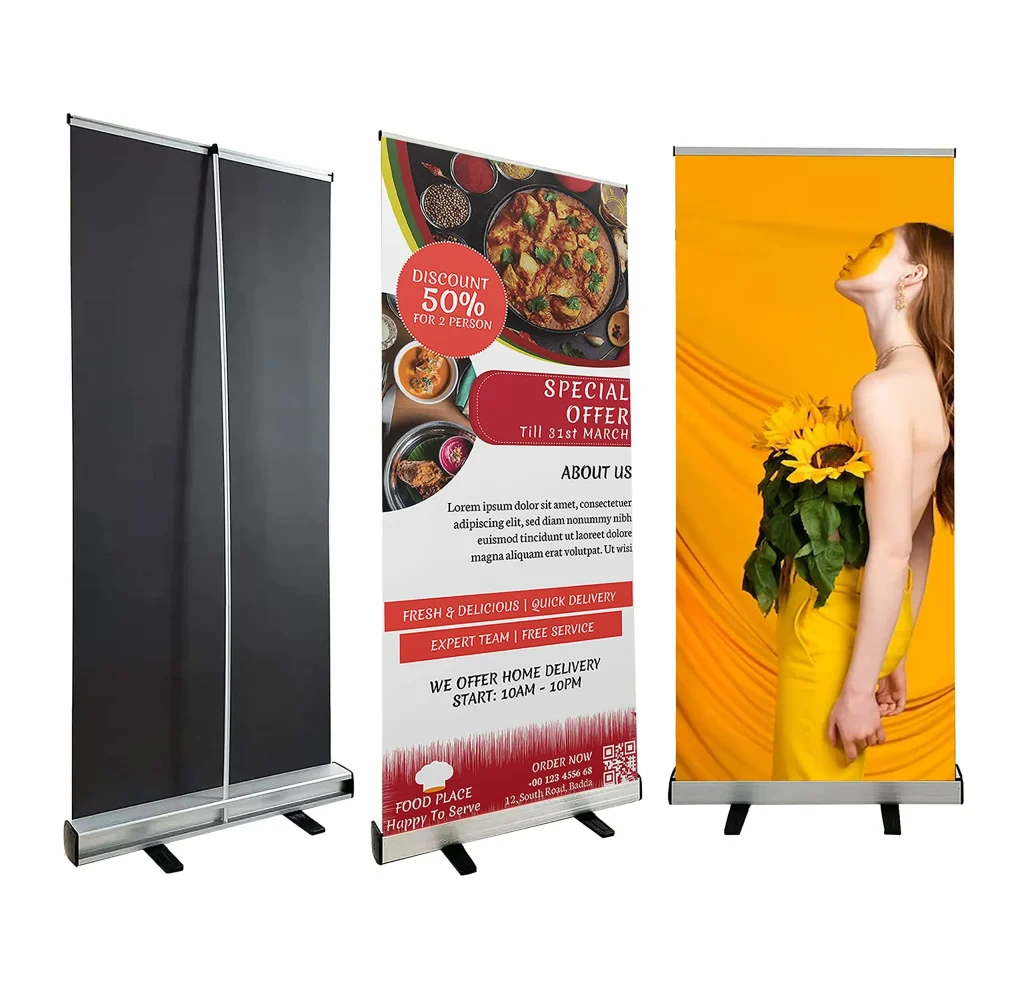
Custom roll-up banners are essential for trade shows, retail displays, product launches, and event signage, delivering a sharp visual impact while remaining portable and cost-effective. To maximize their effectiveness, focus on three core elements: materials, sizes, and print quality for banners. Choosing the right materials, from standard vinyl to lightweight fabrics, helps ensure durability, color consistency, and a professional finish across diverse environments. Understanding the placement and viewing distance informs how you present headlines, images, and logos for quick, legible reads from several feet away. For best results, review proofs with a printing partner before production, and request a test print to validate color and sharpness on the final layout.
In practical terms, these portable display units are often referred to as pull-up banners or retractable signage used in exhibitions and quick-turnaround campaigns. For teams planning a refresh, understanding roll-up banner materials helps compare durability, weight, and finish, and guides how much content you can confidently display. To ensure consistent results, plan ahead with your printer to review proofs, confirm color accuracy, and ensure typography remains legible at distance. When ready, choose a printing partner who can provide a color-proof service and fast turnaround to keep your event schedule on track.
Custom roll-up banners: Choosing the Right Roll-Up Banner Materials for Durability and Visual Impact
Materials determine how long your banner lasts, how it reads from a distance, and how much you’ll pay. When selecting roll-up banner materials, you’ll typically encounter PVC vinyl, polyester fabric, vinyl or polymer blends, and eco-friendly substrates. Each option offers trade-offs between rigidity, color saturation, and cost, so align your choice with how often the banner will be handled and where it will be displayed. A gloss coating can boost punchy colors and crisp edges, while a matte finish reduces glare in bright venues.
If your brand emphasizes sustainability, eco-friendly PVC-free films or recycled-content fabrics may be worth the premium. Consider not just the material itself but also coatings, lamination, and how the substrate handles folding and transport. For longer indoor runs or premium aesthetics, fabric banners can elevate perceived value, whereas PVC remains a reliable, cost-effective baseline for frequent travel and quick turnarounds, all aligned with your design needs and the intended viewing environment.
Roll-Up Banner Sizes that Maximize Message Clarity and Brand Reach
Size selection is a key driver of readability and impact. Common indoor roll-up banner widths are 33 inches and 36 inches, with taller formats like 47 inches or wider options available for expansive messaging. Heights typically range from about 77 to 80 inches, though some frames reach 85–88 inches for taller spaces. Measure your display area to ensure a clean fit and avoid overhang that can distract from your message.
Choosing the right roll-up banner sizes depends on placement and viewing distance. Taller banners with bold typography are easier to read from afar in busy venues, while desktop or counter displays may benefit from a shorter height and a tighter layout. Plan margins, safe areas for logos, and space for headlines so your content remains legible at a glance in any trade show or retail setting.
Print Quality for Banners: Achieving Crisp Images and Accurate Colors
Print quality determines how your artwork translates from screen to print, influencing perceived professionalism and brand credibility. Aim for 150–200 dpi at the final print size for large banners viewed from a distance, while closer-view materials may benefit from 300 dpi. Ensure text is crisp by embedding fonts and avoiding rasterization issues in your vector elements.
Color management is essential for consistent results across devices. Work in the typical CMYK color space and provide color profiles or proofs when possible. Bleed and safe area considerations prevent white edges after trimming, while finishing options like gloss or matte laminates affect durability and glare. When color fidelity matters for precise brand hues, request a printed proof from your banner printing services before the full run.
Design and File Preparation for Optimal Roll-Up Banner Printing
Strong design decisions before printing save time and cost. Use bold headlines, high-contrast imagery, and legible type sizes to improve readability from a distance. Keep critical text inside the safe zone and extend backgrounds beyond the trim by at least 1/8 inch (3 mm) to accommodate cutting variances.
Prepare artwork in recommended formats (often PDF, TIFF, or high-resolution PNG with embedded fonts) and provide any required color profiles. If you’re working with banner printing services, align your file specs with their guidelines to minimize revisions and ensure the final banner matches your brand intent and print-ready specifications.
Durability and Maintenance for Indoor and High-Traffic Roll-Up Displays
Indoor banners typically see higher touch and travel wear, so choose materials and finishes that resist fingerprints and scuffs. For venues with heavy foot traffic, durability and cleanability become decisions that affect long-term appearance and ROI. Fabric banners can offer premium aesthetics but may require careful folding and storage, while PVC options tend to be more rugged for frequent use.
Maintenance is straightforward: wipe with a soft, damp cloth and avoid abrasive cleaners that could dull colors. Proper storage—rolling banners tightly in a cool, dry place—prevents curling or fabric fatigue. Regular inspection for curling at the edges and timely replacement graphics can keep your displays looking fresh across multiple events.
Cost, Turnaround, and ROI: Making Smart Choices with Your Roll-Up Banners
Pricing varies with material, size, and print quality. Fabric banners often carry a premium that can justify higher display ROI in premium environments, while standard PVC options provide budget-friendly solutions for short-term campaigns. Turnaround times depend on quantity and whether proofs are required; plan lead times for production, shipping, and any potential reprints.
Balancing materials, sizes, and print quality is essential for delivering value. If portability and price are priorities, start with a 33-inch width and a standard height in PVC. For flagship launches, consider fabric with higher-end finishes to elevate brand perception. In high-traffic venues, larger sizes with bold typography and accurate color management help maintain legibility from a distance, maximizing impact and return on investment.
Frequently Asked Questions
What are the best roll-up banner materials for Custom roll-up banners used indoors (roll-up banner materials)?
Indoor Custom roll-up banners perform best with sturdy yet lightweight roll-up banner materials. PVC vinyl is durable and affordable for general-use banners. Polyester fabric offers a premium matte finish with less glare, though at a higher cost. Eco-friendly or polymer-blend options balance durability with sustainability. For best results, consider coating (gloss for vibrant colors or matte to reduce glare) to support your design at the intended viewing distance.
How do roll-up banner sizes affect visibility for Custom roll-up banners?
Roll-up banner sizes influence readability and impact. Common indoor widths are 33 or 36 inches, with heights around 77–80 inches. Taller formats draw attention from a distance, while smaller sizes suit desktop displays. Always measure your stand space and keep critical content within the safe area to ensure legibility from the intended viewing distance.
What print quality considerations matter most for banners on Custom roll-up banners?
Print quality for banners depends on resolution, color management, bleeds, and finishing. Aim for 150–200 dpi at the final print size for larger banners viewed from a distance; closer viewing may benefit from 300 dpi. Use CMYK color management and provide color proofs when color accuracy matters. Include safe margins and bleeds, and choose gloss or matte finishes based on glare and durability needs.
What should I know about banner printing services when producing Custom roll-up banners?
When selecting banner printing services for Custom roll-up banners, look for clear proofs, color accuracy guarantees, and compliance with your file specs. Request a color proof before production and confirm turnaround times. Ensure they accept your preferred file formats, provide guidance on bleeds and safe zones, and offer lamination or coating options for added durability.
How can I maximize durability and longevity of Custom roll-up banners?
Choose durable materials and finishes suitable for your usage scenario. Lamination or protective coatings help resist scuffs and cleaning wear. For fabric banners, follow care instructions and store them properly to minimize creasing. Regularly wipe with a soft cloth and mild cleaner, and store in a cool, dry place to extend life.
What design tips help optimize your Custom roll-up banners for event displays?
Use bold headlines and high-contrast imagery to ensure visibility from a distance. Limit typefaces and keep body text concise, letting imagery tell the story. Maintain safe zones and proper bleeds, and use high-resolution images or vectors. Align the design with brand guidelines and prepare files as print-ready to reduce revisions and speed up production.
| Aspect | Key Points | Notes |
|---|---|---|
| Materials |
|
Choose material based on venue, longevity, transport, and color needs. Consider coating options such as gloss for punch or matte to reduce glare. |
| Sizes |
|
Size affects content density and viewing distance; larger banners require bolder typography and stronger color contrast. |
| Print quality |
|
Aiming for sharp images and accurate color enhances perceived professionalism across venues. |
| Design and file prep |
|
Early alignment with print specs reduces revisions and speeds production. |
| Durability, maintenance, and usage |
|
Proper care extends life and keeps branding sharp across events. |
| Cost, production times, and ROI |
|
Balancing price and performance helps maximize impact per event and improve overall ROI. |
| Practical tips |
|
Implementation tips help ensure a smooth rollout and consistent branding. |
Summary
Custom roll-up banners are a versatile display solution for trade shows, retail environments, product launches, and events. This descriptive summary explains how materials, sizes, and print quality come together to impact durability, legibility, and brand perception. By selecting the right combination of material, size, and print settings and by adhering to thoughtful design and file preparation practices, you can maximize visual impact and ROI across venues. This guide emphasizes practical choices, durability, and consistency to help you deploy effective banner campaigns with confidence.